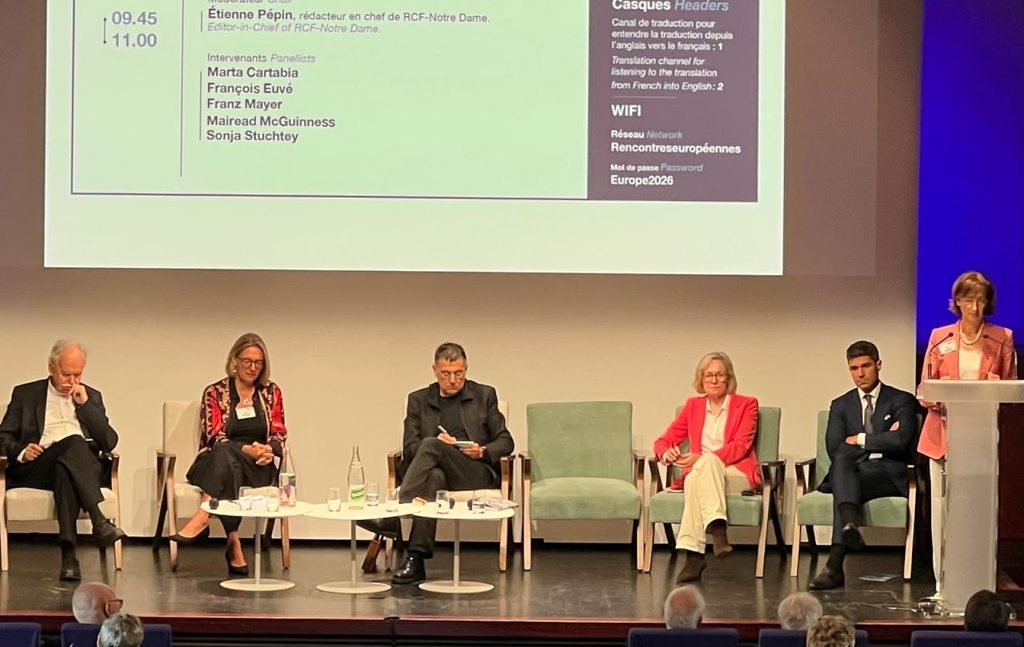
On September 12, 2026, Jean-Marc Lieberherr, founding president of the Jean Monnet Institute, participated in the First European Meetings at Les Bernardins in Paris. He had the honor of opening the event alongside his friend Gerald Knaus, as part of a program bringing together numerous prominent figures engaged in reflecting on the future of Europe.
On this occasion, Martin R. Stuchtey provided a personal account of these two days, which we reproduce below.
First European Meetings at Les Bernardins. Its organizers achieved something more challenging than simply convening a conference: they created a European moment at a crucial juncture.
Thank you to the organizers: Sylvie Goulard, Mario Monti, Cardinal Reinhard Marx, Margrethe Vestager, and Jean-Baptiste de Franssu.
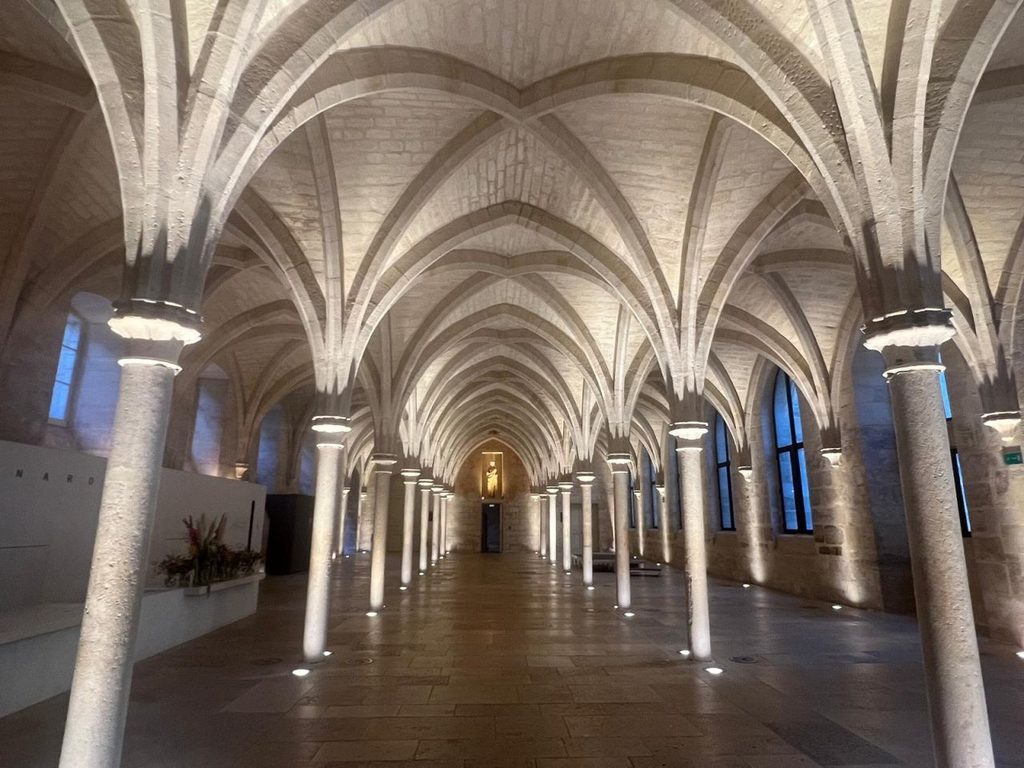
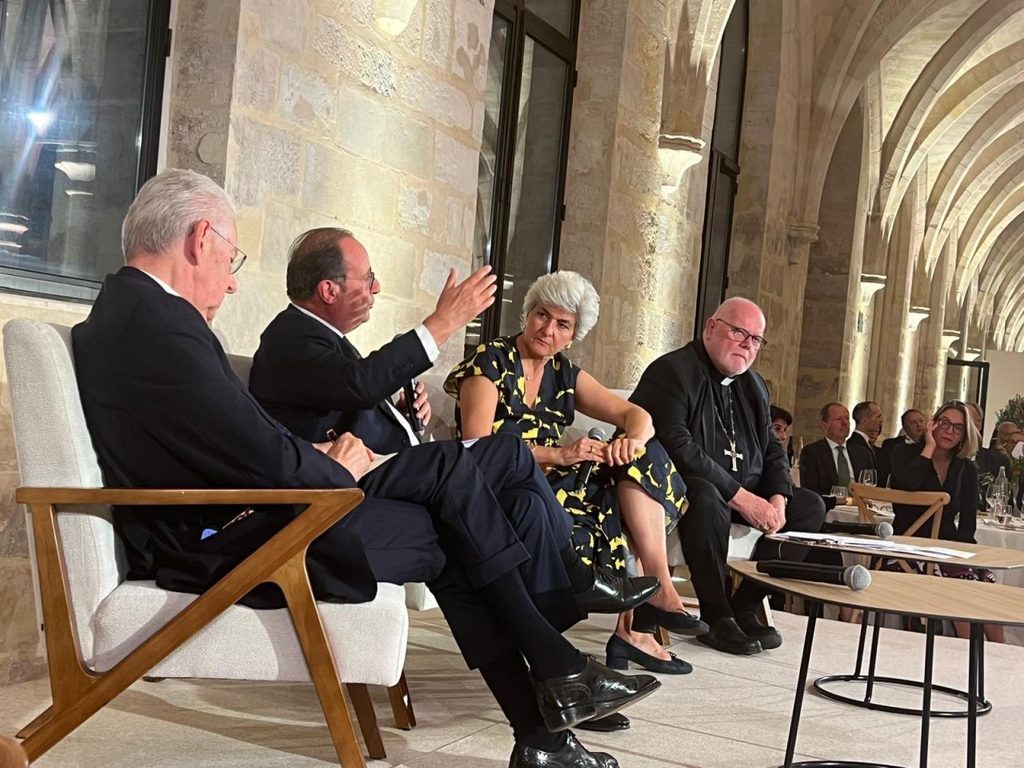
On Friday evening, in the 13th-century nave, Monti declared the EU a success: different cultures within a peaceful society—a project unique in human history. And therefore one worth defending. Marx provided the foundation upon which it rests: a vision of the human person—dignity above all—and the question of whether politics is still guided by it. Defending it is necessary, but not enough. Europe needs a positive vision.
Saturday began with Jean Monnet’s grandson, Jean-Marc Lieberherr Monnet, who portrayed his grandfather as a man of the people: a cognac merchant who dedicated his life to building a community. Europe has never been a coalition of states. It has always been a union of people.
Gerald Knaus laid out the numbers behind this peace: twenty-seven member states, four Schengen associate states, four microstates, and thirty-five countries that have not been at war. Nearly all the others have been at war at least once since 1945. Then came Saxony-Anhalt a week ago: record voter turnout, with the AfD at 43.8%. He and Vestager identified the enemy: autocracies on the outside, extremists on the inside.
Democracy, the rule of law, and the issue of nationalism. Marta Cartabia, president of the Venice Commission, warned that consolidated democracies do not die until they disappear, and that the courts are the first to come under attack. Dr. Sonja Stuchtey addressed the internal threat: European democracy is under the influence of malicious disinformation on an industrial scale, the result of which is fear. People who are afraid do not defend institutions; they abandon them.
Then drones flying over NATO airspace—the same material war. Joschka Fischer, along with Michel Barnier, painted the bleakest picture of Europe’s ability to fight back and called for a positive initiative on the scale of the Coal and Steel Community, the euro, and the Green Deal.
On the topic of security, Helga Schmid opened the discussion. Petras Austrevicius of Lithuania called on Europe to set aside its complacency and look at what is already working: a new level of Baltic cooperation, and the case for building partnerships with Ukraine and learning from its experience. Is defense the grand project? Marx’s objection was this: you cannot rally a continent to defend something unless there is something worth defending.
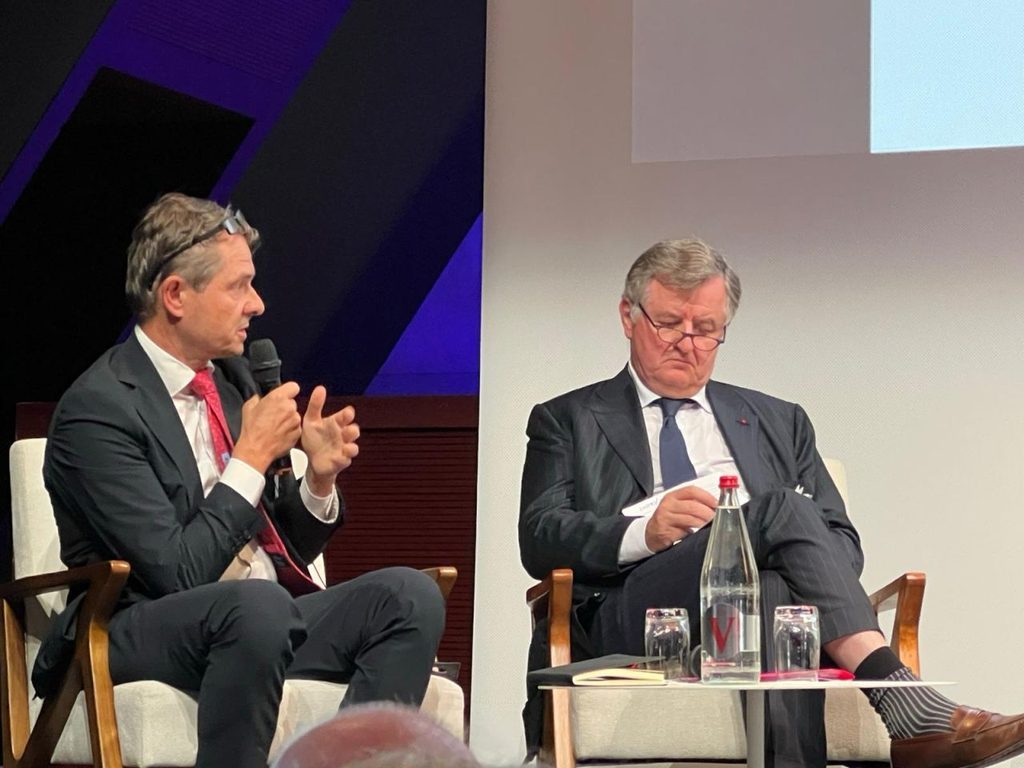
Next, we explored the EU as a laboratory for innovation. Philippe Aghion, winner of the Nobel Prize for “creative destruction,” opened the discussion with a harsh assessment: Europe does not finance its own frontier. My take on this, speaking at the panel as a European entrepreneur in physical AI: a failure in risk perception. European capital sends 300 billion of our savings each year to the United States, into technologies that are vastly overvalued and threaten our sovereignty, and calls this “prudent.” It labels investing in a European technology stack, climate transition, or nature-related initiatives as risky. The panel has it backward.
Europe’s positive vision lies not elsewhere. It lies in what our own capital refuses to finance.
Text and photos by Martin R. Stuchtey.